Instruments and a debated thread
The oud, the guitar and flamenco
What the oud is, how the lute came to Spain, why the flamenco guitar's alzapúa technique traces to the oud's plectrum, and what is still debated.
Reserve your flamenco hour ↗Quick answer
The oud is a pear-shaped, fretless, short-necked lute from the Middle East. The Umayyads brought it to Iberia in 711, and Ziryab is credited with adding a fifth string. Flamenco's alzapúa guitar technique has roots in oud plectrum playing. How much of flamenco as a whole comes from Arab-Andalusian music is still debated.
What the oud is
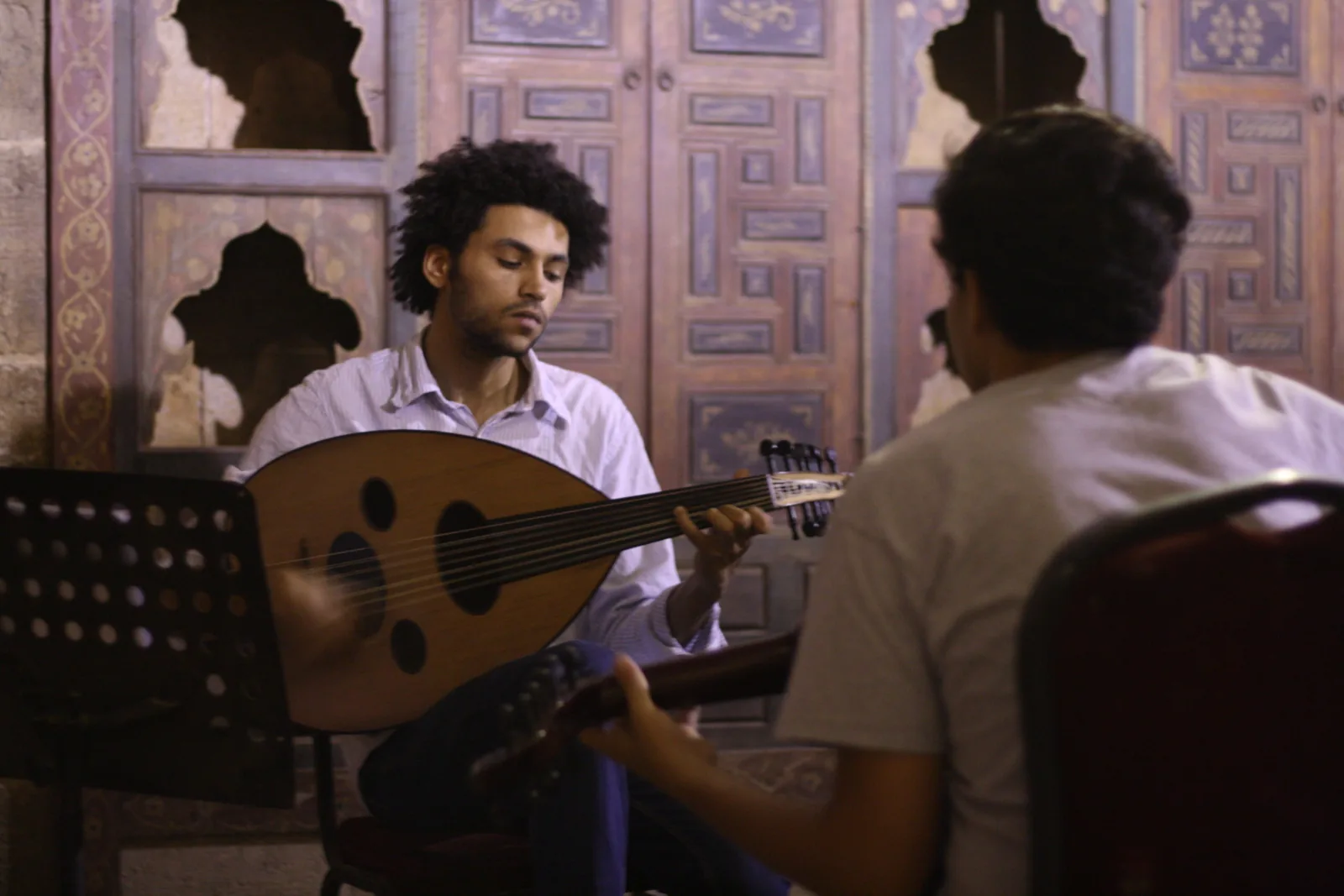
Wikipedia describes the oud as a pear-shaped, fretless, short-necked lute-type instrument from the Middle East. The lack of frets and the shorter neck separate it from the Western lute. It is played with a plectrum called a risha. The Arabic name has several proposed origins, among them a word meaning wood or stick, and one scholar has proposed a Persian source meaning string. The photograph shows a lesson on the instrument in Cairo.
Strings and courses
An oud usually has eleven strings in six courses, though some models have five or seven courses, which means ten or thirteen strings. A course is a pair of strings tuned together, so Ziryab's reported fifth pair of strings is a statement about courses. Wikipedia presents the attribution as tradition, and notes that another writer, Ibn al-Haytham, also mentions a fifth string. The point matters because it ties a named person to a change in an instrument.
The oud comes to Iberia
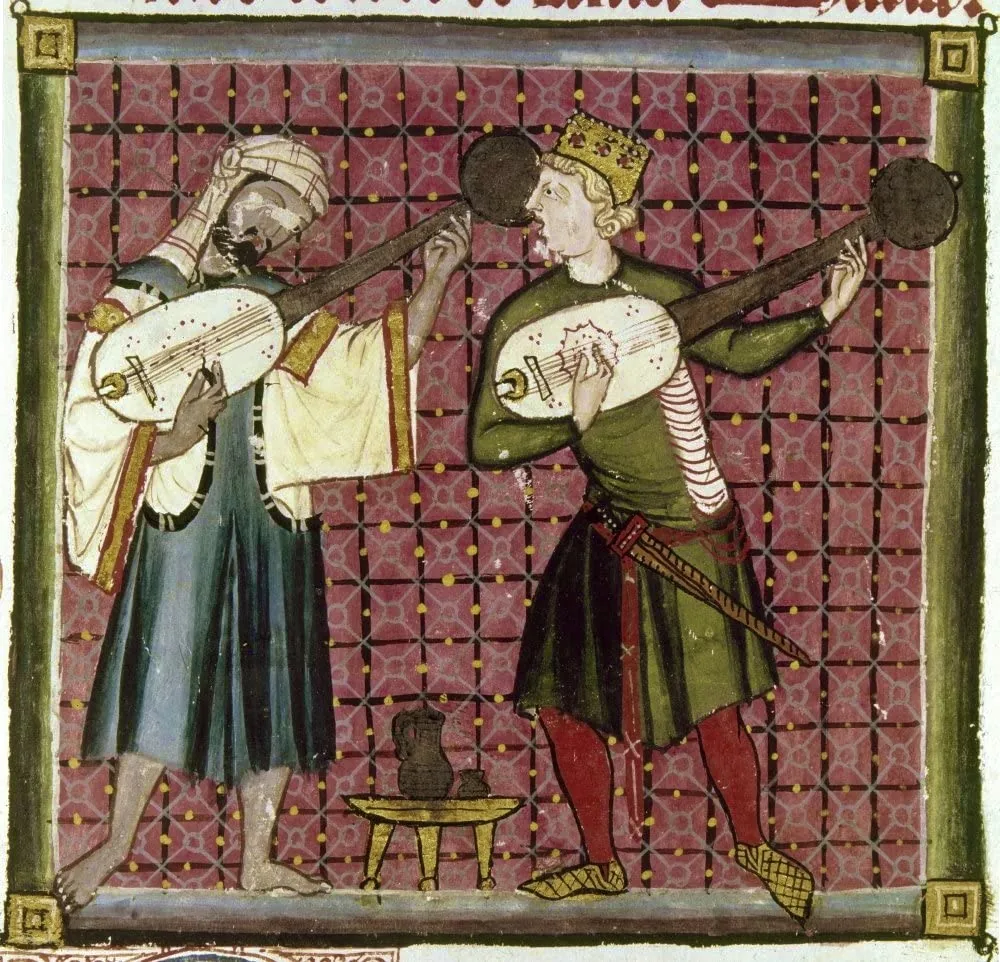
The Umayyads brought the oud to Hispania when they conquered it in 711, according to Wikipedia. Ziryab, a musician exiled to al-Andalus, is credited with adding a fifth string and founding a music school in Córdoba. By the 11th century, Muslim Iberia was a centre for instrument manufacturing, and instruments spread to Provence, influenced troubadours and reached the rest of Europe. Western lutes grew out of the medieval Islamic oud.
The flamenco guitar
A flamenco guitar differs from a classical one in several ways, Wikipedia says. It is lighter, with thinner tops and less bracing, for a brighter and more percussive sound. The strings sit lower, which eases fast playing, and a plastic tap plate protects the body from finger taps called golpes. Backs and sides are usually cypress, sycamore maple or rosewood. The guitar accompanies the singer and the dancer, and a guitarist needs strong volume to be heard over the dancers' shoes.
Watching the right hand
Wikipedia lists three common techniques. Rasgueado is a rolling strum made by outward flicks of the right-hand fingers. Picado is a fast single-line scale played by alternating two fingers. Alzapúa is a technique in which the right-hand thumb moves up and down. In a small room all three are visible from a few metres away, which is one reason a close seat repays attention. Watch the hand, not only the dancer, and you will start to hear which technique makes which sound.
Where the alzapúa comes from
The article says the alzapúa has roots in oud plectrum technique. That is the clearest documented thread between the instrument Ziryab is credited with changing and the guitar you will hear in a flamenco room. It does not make flamenco guitar a form of oud playing, and it does not prove that Ziryab himself influenced the guitar. It says that a gesture used with a plectrum on one instrument is now played with a thumb on another.
What remains debated
Flamenco's origins are contested. Wikipedia sets out several hypotheses, including one that links it to Romani migrations from India and another, Blas Infante's Arabist theory, which it says is not widely accepted. The view most accepted today unites the Gitano and Andalusian theses. UNESCO names Andalusia as its heartland and gives the Gitano community an essential part in its growth. So the oud is one thread among several, not the whole cloth.
Read next: Ziryab, the blackbird of Córdoba
Who this isn't for
Not a tuning manual or a buyer's guide. It does not tell you how to play either instrument, and it stops short of claiming that flamenco is Arab music. It is meant for a curious listener who wants to know why a Madrid café named after a Córdoba lutenist is a reasonable place to hear a Spanish guitar, and for anyone who likes to know where a sound comes from before they hear it live in a small room.
Frequently asked questions
Is the oud in flamenco?
Not as a standard instrument. The link is historical: the guitar's alzapúa technique has roots in oud plectrum playing, according to Wikipedia.
How many strings does an oud have?
Usually eleven strings in six courses, though some have five or seven courses. A Wikipedia article on the oud says so.
Did Ziryab bring the oud to Spain?
No. The Umayyads brought it in 711. Ziryab is credited with adding a fifth string and founding a music school in Córdoba.
Sources